

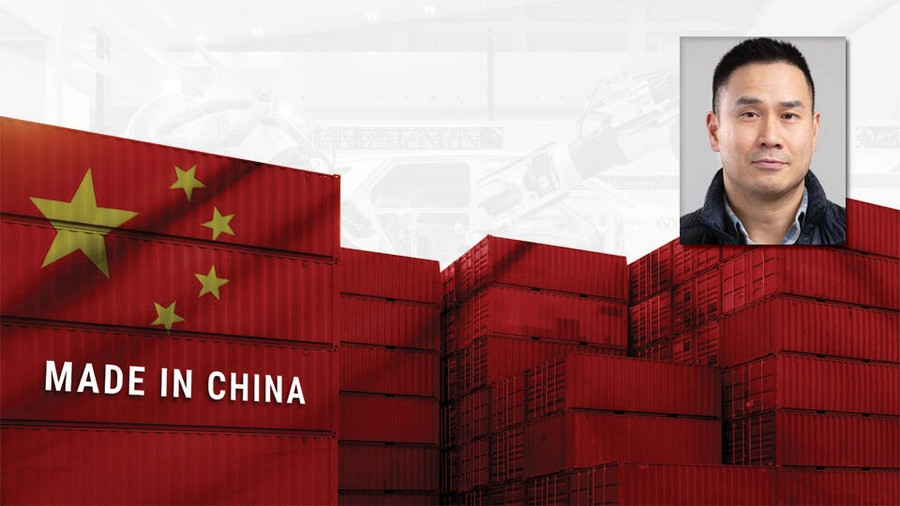
When it comes to product quality, the adult retail industry has come a long way. In the span of the last decade, we’ve seen manufacturers become more aware of what goes into high-quality toys and, in response, move away from the subpar practices of the past.
It’s no surprise that today’s consumers are savvier than ever when it comes to shopping for pleasure toys. They know what materials to look for and why it matters where their toys are made. Part of this process has resulted in toys marked “Made in China” being dismissed as “bad” while toys made in other locations are viewed as “good,” or at least superior to those made in China. But what if it’s not as simple as “good” and “bad?” What if, instead of focusing on where the toys were made to determine quality, we focused on how they were made?
Adopting a respectful, honest and educational approach to informing staff and consumers about manufacturing overseas can be a valuable sales tool.
This month, we’re going to talk about making toys in China. We’ll look at why it is so common, why there is stigma surrounding it, and how some companies are working to create body-safe, high-quality toys, no matter where they are manufactured.
Why are so many sex toys made in China?
It’s not a secret that a lot of the adult retail industry’s products are made in China. In fact, China is the world’s top producer of sex toys, with approximately 70% of all sex toys in the world — not to mention many non-adult product categories — being manufactured there.
Why is this the case? Simply put, it is affordable. This is especially true for toys that contain moving parts and electronics, such as vibrators. This is why big-name companies like Apple choose to manufacture their products in China; making the very same items in the U.S. could cost four times the amount it does in China, and that would put those products out of reach for many consumers.
Why do toys made in China have a bad reputation?
A lot of the negative views of products that are made in China are relics of a bygone era. Thirty years ago, when manufacturing in China was a newer idea and doing things as inexpensively as possible was the goal, the resulting products were frequently of extremely low quality. That created a reputation that has proven very difficult to shake.
What has changed about manufacturing in China?
Like anywhere in the world, products made in China run the gamut from extremely low to extremely high quality. It all depends on how the manufacturers and their factories operate. For example, some companies have their own factory in China, and that factory operates per the company’s standard for product quality and safety.
By owning the factory and controlling the supply chain, a company can ensure that their products consistently meet quality standards that, without that level of oversight, can’t be guaranteed.
Busting ‘Made in China’ Myths
MYTH: Products made in China are of a lower quality.
FACT: Can low-quality items be made in China? Sure! Low-quality items can be made anywhere. But when it comes to quality, who is making a product and how they are making that product is far more important than where that product is made.
MYTH: China has lower safety standards.
FACT: This myth is interesting because safety standards for items made in China and sold in China are actually incredibly high. That said, the standard for items made in China to be exported elsewhere are much lower. This is why it’s important to buy from companies who do their own due diligence to meet rigorous safety standards.
MYTH: Companies with products made in China have simply outsourced manufacturing to cut costs.
FACT: This certainly can be true sometimes. Many companies do exactly this. But there are also companies that set up their own manufacturing facilities in China because it allows them to make products at lower cost, pass those savings to consumers with competitive pricing structures, and maintain quality control. “Made in China” doesn’t always mean a company has handed control of their product off to a facility they are not involved in.
‘Made in China’ and Your Shoppers
For adult retailers, knowing the truth about products that are made in China can help expand your store’s selection and generate more informed conversations between staff and shoppers. Consumers working off of antiquated information might be skeptical about products labeled “Made in China.” Adopting a respectful, honest and educational approach to informing staff and consumers about overseas manufacturing can be a valuable sales tool. Ultimately, shoppers deserve to know that a product made in China can still meet, and even exceed, high quality and safety standards while remaining affordable and accessible.
Ask manufacturers about their quality control processes and how they work with factories and vendors. Armed with up-to-date information, both you and your customers can leave those antiquated myths and stereotypes about products made in China behind.
Eric Lee is the COO of Blush, a global manufacturer of pleasure products.